In the end, she played it safe. U.S. Rep. Ayanna Pressley yesterday announced she won’t be challenging incumbent U.S. Sen. Ed Markey, but she sure made clear she was mighty tempted, as the Globe reports. … I definitely buy the family considerations cited by Pressley. But the Girl Scouts tale? Only partly. As she signed autographs, her thinking was probably more along the lines of: “God, I love this job and don’t want to risk it by running for the Senate.” …
So now Hub Blog and other pundits can start peddling Pressley for Senate in 2030, when then octogenarian Elizabeth Warren’s term ends, or 2032, when then near-nonagenarian Markey’s likely next term ends, assuming he makes it that far and doesn’t decide to pull a Chuck Grassley. … Btw: Add Seth Moulton to those potential scenarios.
Update — 12.5.25 — GBH’s Adam Reilly looks at who may have benefited the most from Pressley’s decision – Markey or Moulton. My hunch is Markey, who can now count on overwhelming primary support from progressives.
Once again, I’m in backpedaling mode when it comes to this year’s amazing Pats. I still think that they’re benefiting from an incredibly easy schedule and that there’s way too much Pats dynasty nostalgia going on. But, no, this team isn’t “fool’s gold,” not after last night’s drubbing of the Giants, injuries be damned. Granted, the Giants are the Giants, lower than even the lowly Jets. But good teams are supposed to beat the crap out of bad teams – and that’s what the Pats did last night. Very impressive. …
Can’t wait for the Dec. 14 Bills game. Gillette is going to be hoppin’.
Btw: Play of the Game? You know which one. Not quite up there with Garo Yepremian’s famous gaffe, but still pretty funny.
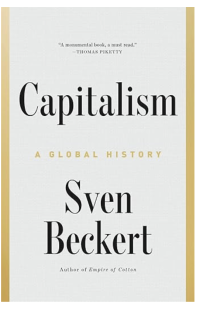
Based on this NYT review of Sven Beckert’s “Capitalism: A Global History,” I think it’s safe to say Beckert, a Harvard historian, is no fan of capitalism, blaming it for most of the world’s ills, past and present. Or maybe it’s just the reviewer going a tad overboard, describing Beckert’s book as a “moral indictment” of capitalism (“the global beast”) and praising “the metaphor of monstrosity (that) runs throughout Beckert’s pages.” … And here I was, a lowly blogger, thinking that ever-evolving capitalism over the centuries was not so much an economic system as it was a reflection of human nature and activity, both good and bad, from stuffed supermarkets to stuffed slave ships, and that it requires constant monitoring and regulation precisely because humans will always be humans. … But, again, I’m just a lowly blogger, so I guess my notion of human nature factoring into human history is just so passé.
— A new dorm could house hundreds of students now competing for off-campus apartments in the area: “Berklee’s $28M Fenway Acquisition ‘Increases Visibility” (Banker & Tradesman)
Will she or won’t she? That’s the big political question these days when it comes to whether U.S. Rep. Ayanna Pressley will run for U.S. Senate, challenging incumbent Ed Markey. The latest Suffolk/Globe poll suggests she can win a three-way Dem primary race against Markey and U.S. Rep. Seth Moulton. It would be a very close but doable race for an ambitious woman who got to where she is by knocking off a seemingly safe incumbent back in 2018. Personally, I can see my previously expressed Scenarios A.) and C.) unfolding, tilting more toward C.), if she indeed goes for it.
But that brings us back to the opening question: Will she or won’t she? I’d put the odds of her running at 40-60. She could gain a lot by running, but she’d be giving up a lot too, i.e. a very safe congressional seat. …
Passing thought: What is Alexandria Ocasio-Cortez thinking and advising? Markey is her progressive Green New Deal pal. But Pressley is her fellow Squad member. … Just wondering.
Passing thought II: What’s up with Gov. Healey’s numbers? She’s looking more vulnerable these days.
Update — 11.30.25 –– From the Herald’s Joe Battenfeld: “Ayanna Pressley the looming bigfoot in U.S. Senate race”
Update II — 12.1.25 – The Herald’s Peter Lucas also thinks Pressley would be a formidable challenger to Markey — if she decides to challenge him.
Based on a new Suffolk/Globe poll, it sure looks like a controversial rent control measure, assuming it gets on the statewide ballot next year, will easily pass. As I mentioned last week, it just resonates with too many people struggling to get by today in Massachusetts. Yes, rent control is a terrible idea for a number of rational reasons. But tell that to 20- and 30-something types living with their parents or with three roommates in crappy overpriced apartments with no hope of buying a home any time soon in this ridiculously expensive housing market. Tell that to seniors on fixed incomes and facing displacement because they can’t afford relentless rent hikes.
Anyway, I’ll let the folks at NAIOP and MAR make the Plan A arguments against rent control. I wish them luck. They’re going to need it. But maybe others should start thinking of a Plan B. I.e. what will the legislature do if the current extreme rent control passes? I’m a big believer that lawmakers should abide by the wishes of referendum voters. But in this case, the current rent-control measure is so restrictive, so counter-productive to the state’s interests that it may need post-election tinkering by lawmakers – while at the same time abiding by the spirit of the law.
Two Plan B suggestions pop immediately to mind: 1.) Make rent control optional in towns and cities, via local referendums, rather than compulsorily, as the current measure stipulates 2.) Permanently exempt all new housing construction from rent control (something even NYC does), not just for ten years, in order to promote the building of badly needed new housing.
Right now, Beacon Hill lawmakers seem shell-shocked by the sheer number of referendums headed for the statewide ballot next year, as MassterList reports. But someone at the State House better be thinking of a Plan B when it comes to rent control. The state is likely going to need it.
Amid all the silly Super Bowl talk by Boston sports writers prior to this past Sunday’s Pats game, Cam Newton had the gall to suggest that maybe the Pats’ recent success was a “fool’s gold,” based on a weak schedule and lack of team injuries. He even doubled-down on his “fool’s gold” comment after a predictable local bout of indignation. … But you know what? Cam was largely right. Here’s one Herald headline following Sunday’s less-than-impressive, injury-prone win over the Bengals: “How much damage did the Patriots’ Super Bowl hopes just take?” And then there’s this from the Globe: “Patriots win ninth straight, but red-zone struggles are a major concern if they want playoff success.”
Bottom line: There’s too much 2001 Pats nostalgia going on here. This past Sunday’s game was a reality check for the Pats and their fans. Let’s see how the Pats respond moving forward.
Oh dear. They’re talking about it again. Congestion pricing, as the Globe’s Jon Chesto reports. … I have nothing against congestion pricing per se – if it’s really about relieving traffic congestion. But when lawmakers start talking about “revenue streams” and “pilot programs,” my metro-west instinct senses what’s coming: sticking it to Mass. Turnpike drivers yet again and leaving out tolls on I-93, Route 1 and Route 2 etc. And once up and running the so-called pilot program would become a permanent program with future tolls adjusted to meet the T’s revenues needs, not congestion levels. … Gov. Baker was right to veto the last congestion pricing proposal that lawmakers passed, citing “equity” concerns and other problems.
Maybe someone should ask Gov. Healey her thoughts on congestion pricing amid all the current talk about “affordability”? Might as well ask GOP gubernatorial candidates as well, right? And what about Mayor Wu? I’m pretty sure owners of Boston’s struggling office towers might have an opinion or two as well.
Re NYC’s suspended congestion program: they actually had a rather robust traffic relief plan in place when it was briefly implemented. They wanted to raise money, sure. But they were also serious about reducing traffic in downtown Manhattan. I don’t see that same seriousness in Boston. Proponents here are more focused on the money, not the traffic.
Update — 12.1.25 — There’s a lot of great comments/suggestions on congestion pricing at Universal Hub, which picked up my post a few days ago.
It all started with an article on James Polk’s portrait now hanging in President Trump’s office, followed by conversations with a few relatives and friends about how little we knew about U.S. history stretching from roughly the end of Andrew Jackson’s term in office (1837) to the Civil War era under Abraham Lincoln (1861-1865). Presidents William Harrison, John Tyler, James Polk, Zachery Taylor, Millard Fillmore, Franklin Pierce, James Buchanan? They’re mostly a blur to me. Sure, I know about many of the great events that led up to the Civil War, but not much else.
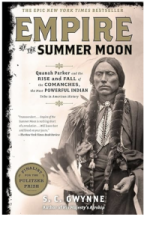
Well, I’ve just finished filling in some of my history-buff blank spots by going on a reading tear, starting with a biography of James Polk and unexpectedly drifting into a larger crash course on the history of the U.S. Southwest in the early years of its American conquest and settlement. Here’s a quick review of each of the four history books I’ve recently tackled, in between various Michael Connelly, Don Winslow, John MacDonald diversions, etc.
A Country of Vast Designs: James K. Polk, the Mexican War and the Conquest of the American Continent, by Robert W. Merry. Guarded thumbs up recommendation. – This is a hard-core history buff’s read, but it’s worth it. Polk politically came out of nowhere to oversee the largest territorial expansion in U.S. history, via the Texas annexation, Mexican War and Oregon Territory treaty with Great Britain. Many of Polk’s actions were controversial at the time – and remain controversial to this day.
So Far from God: The U.S. War With Mexico, 1846-1848,by J.D. Eisenhower. Thumbs up recommendation. – Reading Merry’s biography of Polk made me realize how little I knew about the Mexican War. So next up was a straightforward military history of the conflict by none other than J.D. Eisenhower, the son of the WWII general and president. They’re all there: Zachary Taylor, Winfield Scott, John C. Fremont and others who helped rip away from Mexico the future states of California, Nevada, Utah, Arizona, New Mexico, and parts of Colorado, Wyoming, and Oklahoma.
Empire of the Summer Moon: Quanah Parker and the Rise and Fall of the Comanches, the Most Powerful Indian Tribe in American History, S.G. Gwynne. Big thumbs up. – My favorite of the four books was recommended by a friend – and I can’t praise Empire of the Summer Moon enough. Talk about filling in historical blank spots. The Comanches were the regional Spartans of their day, militarily feared by all in the Southwest – Indians, Spanish, Mexicans, Americans. The tribe’s long and brutal confrontation with Texans and later Americans should almost be called The Forty Years War. But this book is much more than a military history. It’s a sweeping, eye-opening, multicultural history of the Southwest in general.*
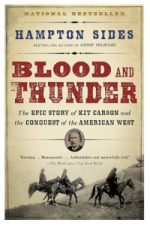
Blood and Thunder: The Epic Story of Kit Carson and the Conquest of the American West,byHampton Sides. Big thumps up. – This is my second favorite of the four books I read, recommended earlier this fall by a friend after I raved to him and others about how much I liked Empire of the Summer Moon. It’s another sweeping, multicultural history of the West and Southwest, using the great frontiersman Kit Carson as a focal point to tell a much larger story about so many other fascinating people and events. The end of the book, in which the Navajo nation finally succumbs to U.S. military forces and is subjected to a form of ethnic cleansing, is beyond sad. And as much as Hampton clearly and justifiably admires Carson (as do I after reading this book), there’s no escaping his faults and role in the Navajo tragedy. What a complex legacy and history.
And that’s Hub Blog’s crash-course reading list on U.S. Southwest history. Just thought I’d pass it along to fellow history buffs who might be interested.
* Note: While reading Empire of the Summer Moon, I remembered I had not so long ago read Forget the Alamo: The Rise and Fall of an American Myth, a revisionist history of the Alamo and the Texas origins story. The three authors go a little overboard, coming close at times to mocking the courage of some historical figures. But their main point is convincingly made: Texas’s early history was intricately intertwined with slavery — and white Texans’ determination to maintain the institution of slavery.
The Massachusetts Republican Party is going through yet another of its meltdowns, as the Herald’s Joe Battenfeld and Contrarian Boston’s Scott Van Voorhis report. How bad is it? The state GOP had only $15,000 in its campaign coffers as of the end of October, as Scott notes.That’s roughly the value of three used Chevy Aveos. Can the party ever right itself? Well, it hasn’t righted itself for more than a generation now. In fact, the party has actually contracted the more it’s tried to expand. Only 8.3 percent of the state’s registered voters now call themselves Republican. But here’s the thing: Democrats may control every major elected office in Massachusetts, but only 25.7 of state voters call themselves Democrats. There’s something going on here besides Mass. GOP incompetence and Mass. Dem dominance by default.
“The age of party democracy has passed. Although the parties themselves remain, they have become so disconnected from the wider society, and pursue a form of competition that is so lacking in meaning, that they no longer seem capable of sustaining democracy in its present form.”

 Hub Blog