.
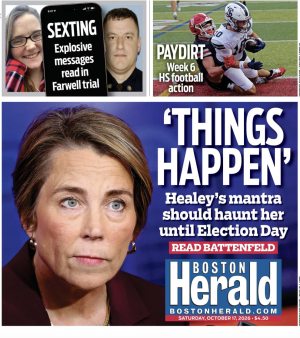
GOP gubernatorial Mike Minogue is trying to keep his chin up as polls show him losing big next week to Maura Healey, as MassLive reports (“Republican Minogue confident heading into home stretch: ‘Lies, damn lies and polling’”) and as the Globe’s Adrian Walker and the Herald’s Joe Battenfeld perform early political autopsies on his campaign. But am I the only one who thinks Minogue has performed just well enough (at least for a political rookie) to establish himself as a potential contender for elected office down the road? That he might do better a second time around, sort of like former Republican Govs. Mitt Romney and Charlie Baker, both of whom lost before they won? … Two obstacles to Minogue prevailing in the future: his pro-life stand on abortion (Mitt deftly flip-flopped on the issue while Baker was pro-choice) and Question 3 if it passes (no more GOP primary coronations). … Above, C-Span video of the Romney-Kennedy U.S. Senate debate in ’94, during Mitt’s first go at statewide office.
Update – 10.26.26 – Jon Keller has an excellent piece at MassterList on how moderate Independents aren’t thrilled with either Healey or Minogue. … The more I think of it, the more Minogue reminds me of Charlier Baker 2010, who ran against incumbent Deval Patrick as a hyper-critical Republican. He alienated Independents in the process — and didn’t win. A chastened Charlier Baker 2014 was less robotic and more moderate — and won.